Crop Protection Applied When Timing Matters
Fungicide Drone Application in Arkansas and Missouri for disease management when quick treatment protects crop productivity
Disease pressure builds quickly once environmental conditions favor fungal development, and delays in fungicide application allow infection to spread through fields before treatment occurs. Aerial fungicide application through PNM Drone Services delivers product across large acreage without waiting for ground equipment availability or field access improvements. You specify the fungicide and target disease, and the drone applies according to your treatment plan during the narrow window when protection matters most for yield preservation.
This service addresses the operational challenge of deploying fungicide fast enough to stop disease progression in crops already showing early symptoms or in fields where environmental forecasts indicate imminent infection risk. Traditional ground rigs require time to mobilize, navigate field entries, and complete coverage without damaging plants. Drone systems bypass these delays, applying fungicide while conditions still allow effective disease control and before the crop loses productivity to infection spread.
Schedule fungicide application services by providing field locations, crop stage, disease concerns, and your preferred fungicide chemistry for the treatment plan.
What Proper Fungicide Application Requires
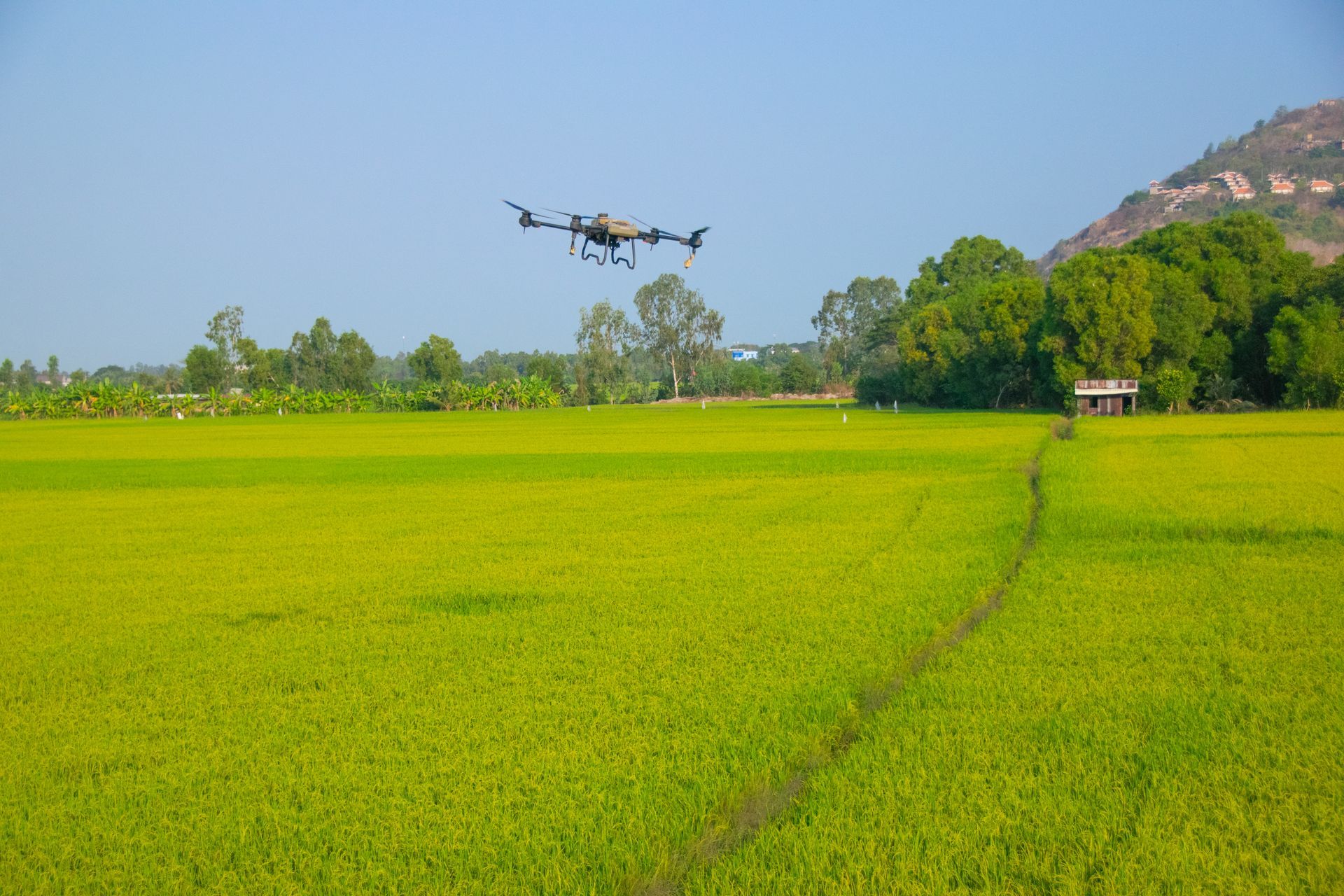
The drone loads fungicide product mixed to label specifications and applies it across fields using flight paths that ensure complete coverage without gaps that leave disease entry points. Application occurs at altitudes and speeds calibrated to produce droplet sizes appropriate for foliar fungicide work, with environmental monitoring ensuring conditions support product performance. This process reduces the time between disease identification and protective treatment, which directly affects how well the fungicide limits infection spread.
After application, growers observe fungicide residue on plant surfaces without the broken stalks or leaf damage that ground rig traffic creates during late-season treatment. Disease symptoms stop progressing in treated areas, and yield loss slows compared to untreated zones where infection continues unchecked. Crops maintain photosynthetic capacity through grain fill or maturity stages because fungicide reached the canopy before disease pressure reduced leaf function.
Timing remains the most critical factor in fungicide effectiveness. PNM Drone Services responds to treatment requests based on current field conditions and forecasted disease pressure, deploying quickly when weather windows align with application needs. The service does not replace preventative fungicide programs but provides rapid response capability when disease threats emerge between scheduled treatments or when field conditions delay traditional application methods.
What Growers Usually Ask
Crop producers evaluating aerial fungicide options need clarity on product compatibility, coverage speed, and how application timing affects disease control outcomes.
What fungicides work with drone application systems?
Liquid fungicides labeled for aerial use, including strobilurin, triazole, and SDHI chemistries commonly applied to row crops, are compatible with drone sprayers when mixed according to product guidelines.
How quickly can fungicide be applied across large fields?
Drones cover acreage at rates that allow treatment completion within single-day windows, reducing the multi-day delays that sometimes occur when ground equipment queues build during peak disease pressure periods.
When is aerial fungicide application most beneficial in Arkansas and Missouri?
Late-season disease flare-ups during wet weather periods and situations where crop canopy height or field moisture limits ground sprayer access create the strongest case for aerial treatment.
What happens if rain is forecasted after fungicide application?
Application scheduling accounts for label-specified rain-free intervals, with timing adjusted to ensure fungicide dries and bonds to plant tissue before precipitation events occur.
How does drone spraying minimize crop damage during fungicide application?
The absence of physical equipment contact preserves plant structure and leaf area during critical growth stages when ground rig traffic would crush rows and reduce the photosynthetic surface the fungicide is intended to protect.
PNM Drone Services works with crop consultants and agronomists to coordinate fungicide application timing that aligns with disease forecasting models and treatment thresholds. Reach out to discuss your acreage, disease concerns, and fungicide plan with the farm-raised team operating throughout the tri-state agricultural region.