Application Completed Where Ground Rigs Can't Go
Hard-to-Reach Acreage Drone Application in Steele for wet fields, rough terrain, and limited-access agricultural zones
Some acreage never gets treated because ground equipment can't access it without causing damage or getting stuck. Wet field edges, muddy low spots, rocky sections, and areas with drainage issues become untreated zones that harbor weeds and reduce overall productivity. PNM Drone Services delivers aerial application across difficult-access land in Steele, applying herbicides, fungicides, or fertilizers to sections that would otherwise be skipped or delayed until conditions improve. Farmers use this service when timing windows are tight and waiting for ground to dry means missing critical application stages.
The drone covers field edges, point rows, terraces, and specialty zones without compacting soil or creating ruts that affect future fieldwork. This method protects crop ground conditions while ensuring product reaches areas that contribute to weed pressure or pest issues if left untreated. Application accuracy remains consistent across uneven terrain, steep slopes, and sections where traditional spray rigs either skip passes or apply unevenly due to equipment limitations.
Arrange a consultation to review your property's access challenges and build an aerial application plan that covers acreage ground equipment can't handle efficiently.
Why Aerial Application Improves Coverage Across Challenging Ground
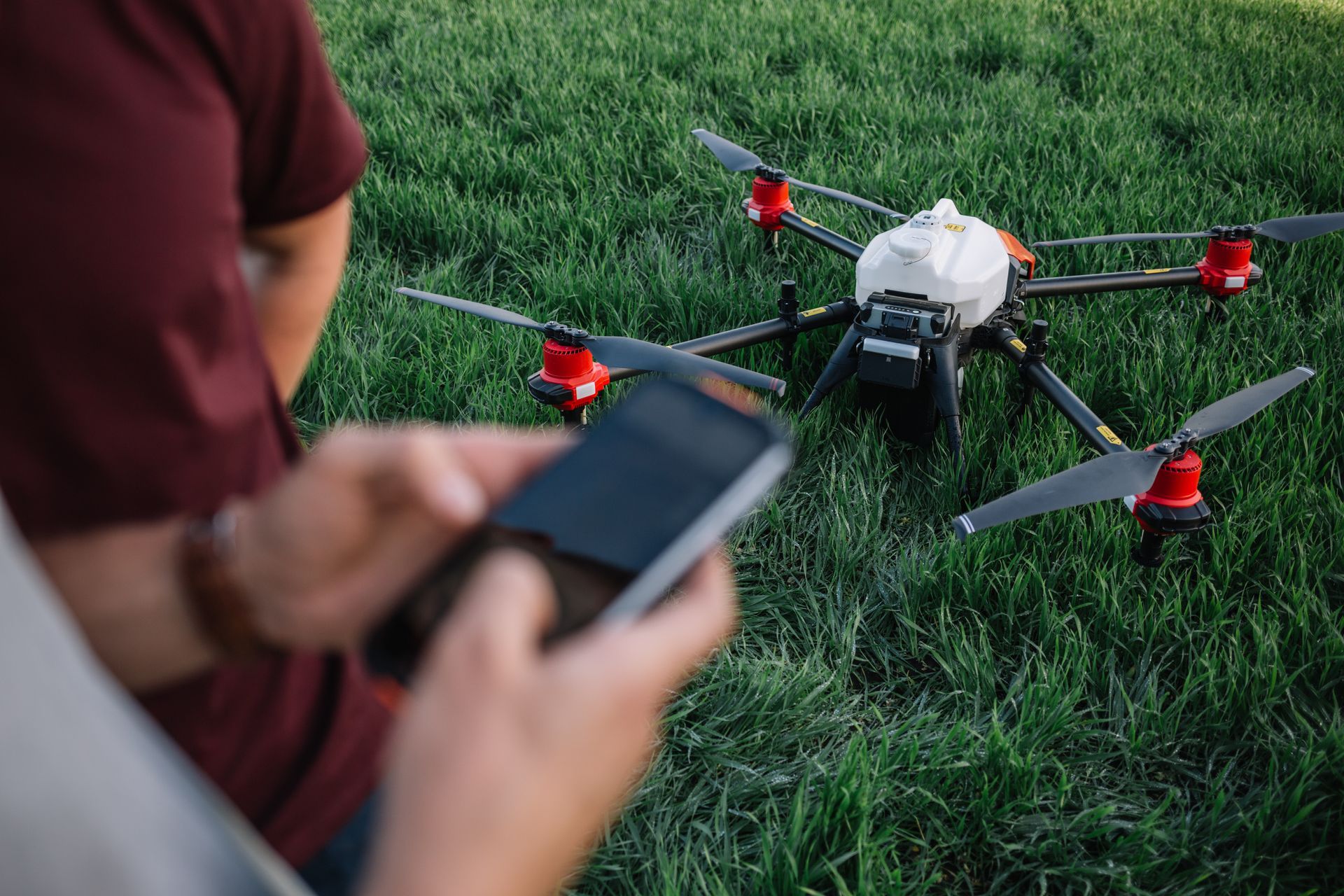
Ground-based spray rigs are limited by soil conditions, slope angles, and obstacle placement, often leaving gaps in coverage that reduce treatment effectiveness. PNM evaluates each property during an on-site visit, mapping sections where access is restricted by wet soil, creek crossings, fence lines, or terrain features that make conventional spraying impractical. The drone applies product at consistent rates across these zones, maintaining the same coverage quality as accessible field areas without requiring soil to be firm enough to support heavy equipment.
After application, you'll notice that problem zones receive the same treatment as the rest of the field, preventing weed escapes or pest pressure from building in areas that were previously undertreated. Crop ground remains undisturbed, with no tire tracks or compaction zones that would affect water infiltration or root development in subsequent growing seasons. Field edges and odd-shaped sections become part of the managed acreage rather than neglected areas that require hand work or repeated cleanup efforts.
The service works with the products and application rates you're already using across the rest of your operation. PNM coordinates with farmers to match spray timing with field conditions and treatment windows, ensuring difficult-access areas get covered during the same operational window as conventionally sprayed sections. Weather monitoring and wind conditions are factored into every application to maintain drift control and product effectiveness.
Questions Farmers Ask About Hard-to-Reach Application
Operators managing diverse acreage in Steele often need specific information about how drone application integrates with existing spray programs and what situations justify aerial coverage over waiting for ground access.
What types of products can drones apply to difficult-access acreage?
The application handles herbicides, fungicides, pesticides, and liquid fertilizers commonly used in row crop and specialty operations, with product compatibility confirmed during planning based on your existing spray program and formulation requirements.
How does drone coverage compare to ground rig application rates?
Application rates are calibrated to match your field plan, with consistent delivery across treated zones regardless of terrain, and PNM verifies calibration settings before each job to ensure accuracy.
When does aerial application make sense over waiting for ground to dry?
The decision depends on timing sensitivity for weed control stages, pest pressure, or disease windows, and aerial coverage becomes practical when waiting for trafficable conditions would mean missing effective treatment windows or allowing problems to worsen.
What changes in field management after hard-to-reach zones get consistent treatment?
Problem areas stop serving as weed seed sources or pest reservoirs that affect surrounding crop zones, and overall field uniformity improves when every section receives planned inputs rather than only accessible areas.
How is application coordinated with the rest of the spray schedule?
PNM works directly with your spray timing and product rotation, treating difficult-access sections during the same operational window as ground rig work so the entire field receives uniform coverage without delays caused by access limitations in isolated zones.
PNM Drone Services provides aerial support tailored to the specific access challenges on your farm, from isolated problem zones to larger sections where terrain or soil conditions limit conventional equipment. Contact PNM to walk your property and discuss how aerial application can improve coverage consistency across acreage that's been difficult to manage with ground-based equipment.