Insect Control Deployed Before Yield Loss
Pesticide Drone Application in Arkansas and Missouri for crop protection when insect pressure requires fast treatment response
Insect populations expand rapidly once threshold levels are reached, and treatment delays allow feeding damage to accumulate across fields before pesticide application occurs. PNM Drone Services applies pesticides aerially using your selected chemistry and target pest strategy, covering large acreage quickly when timing determines whether yield loss remains minimal or becomes significant. The service eliminates the access delays and crop damage associated with ground equipment, delivering treatment during the response window when insecticide effectiveness prevents economic loss.
Aerial pesticide work solves the logistical problem of applying crop protection products when field conditions or crop height make ground equipment access slow or damaging. Wet field areas that delay traditional sprayers become immediately treatable, and tall crops receive pesticide coverage without the mechanical injury that follows ground rig passes. This approach matters most when scouting reports indicate pest populations above economic thresholds and treatment must occur within days to prevent feeding damage from erasing profit margins.
Request aerial pesticide treatment by identifying pest pressure levels, affected acreage, and your chosen insecticide for the application plan.
How Pesticide Application Protects Crop Yield
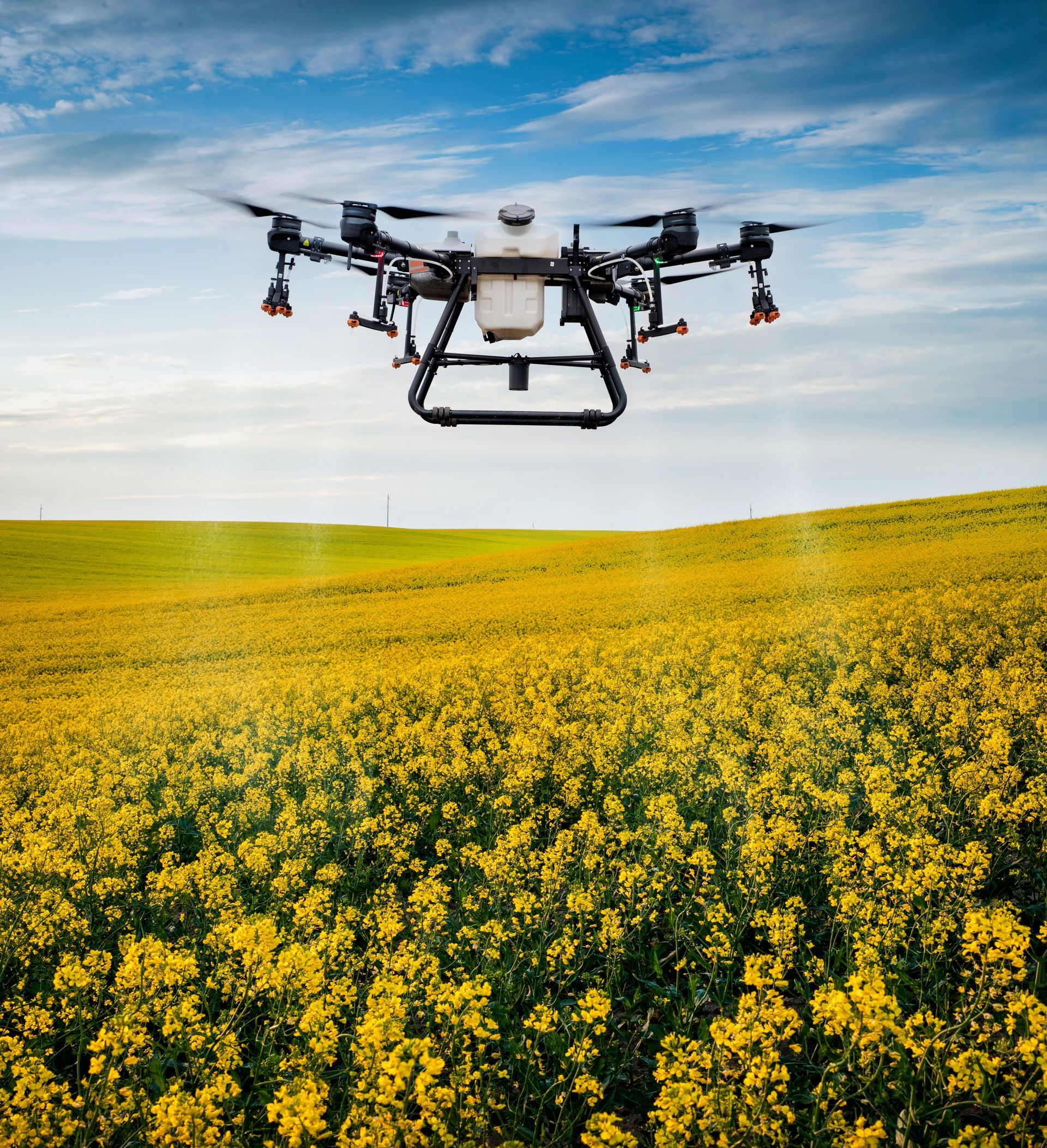
The drone carries insecticide loads across fields using GPS-tracked flight paths that ensure uniform coverage over pest-affected zones. Application rates match label requirements for the target insect and crop stage, with droplet size and flight altitude adjusted to achieve canopy penetration where feeding activity occurs. This process compresses treatment time compared to ground methods, reducing the number of days between pest identification and control measure deployment.
Once application completes, farmers observe reduced insect feeding damage and lower pest counts during follow-up scouting. Crops maintain leaf area and pod integrity through reproductive stages because pesticide reached the canopy before populations caused irreversible damage. Fields treated aerially show no equipment tracks or crushed plants, preserving the yield potential that ground sprayer traffic would have reduced during late-season application timing.
The service adapts to both reactive pest outbreaks and planned protection programs where application timing must align with insect life cycles. PNM Drone Services coordinates with agronomists and crop consultants to schedule pesticide deployment based on scouting data, weather forecasts, and product-specific application windows. The method works best when integrated into broader pest management strategies that include threshold monitoring and timely intervention.
Answers to Frequent Pesticide Service Questions
Growers facing insect pressure want to understand how aerial pesticide application integrates with existing pest management plans and what operational advantages the method provides during critical treatment windows.
What insecticides can be applied using drone systems?
Liquid pesticides labeled for aerial use, including pyrethroids, organophosphates, and neonicotinoids commonly used in row crop production, work with drone sprayers when mixed according to manufacturer specifications.
How does aerial pesticide application improve response time during outbreaks?
Drone systems deploy without requiring field entry preparation or extended mobilization, allowing treatment to begin within hours of pest threshold confirmation rather than days later.
When should I schedule pesticide application to avoid resistance development in Arkansas and Missouri?
Rotating pesticide modes of action and applying during early pest life stages both reduce resistance risk, with timing coordinated based on integrated pest management guidelines and local extension recommendations.
What field conditions make aerial pesticide application more practical than ground equipment?
Wet soils, tall crop canopies, standing water in low spots, and any situation where ground rig access would delay treatment or cause secondary crop damage create strong operational cases for drone application.
How is pesticide coverage verified after aerial application?
Flight data logs document application paths and rates, while post-application scouting confirms pest mortality and feeding damage reduction in treated zones compared to untreated check areas.
PNM Drone Services coordinates pesticide application with your crop protection calendar and responds to pest pressure developments that require rapid treatment deployment. Contact the locally operated team to discuss your acreage, pest concerns, and insecticide plan based on current field conditions and scouting reports.